
 English
 中文简体
 Türk
The garment hot-melt adhesive film selected for a fusible interlining line decides how much rework ends up in pressing, not the operator's skill. A 40 gsm PO film activated at 110 C for 12 seconds can produce an even bond on woven polyester, while the same film on a stretch knit delaminates after one wash cycle. The film must match the fabric's heat tolerance, stretch recovery, and wash protocol at the same time.
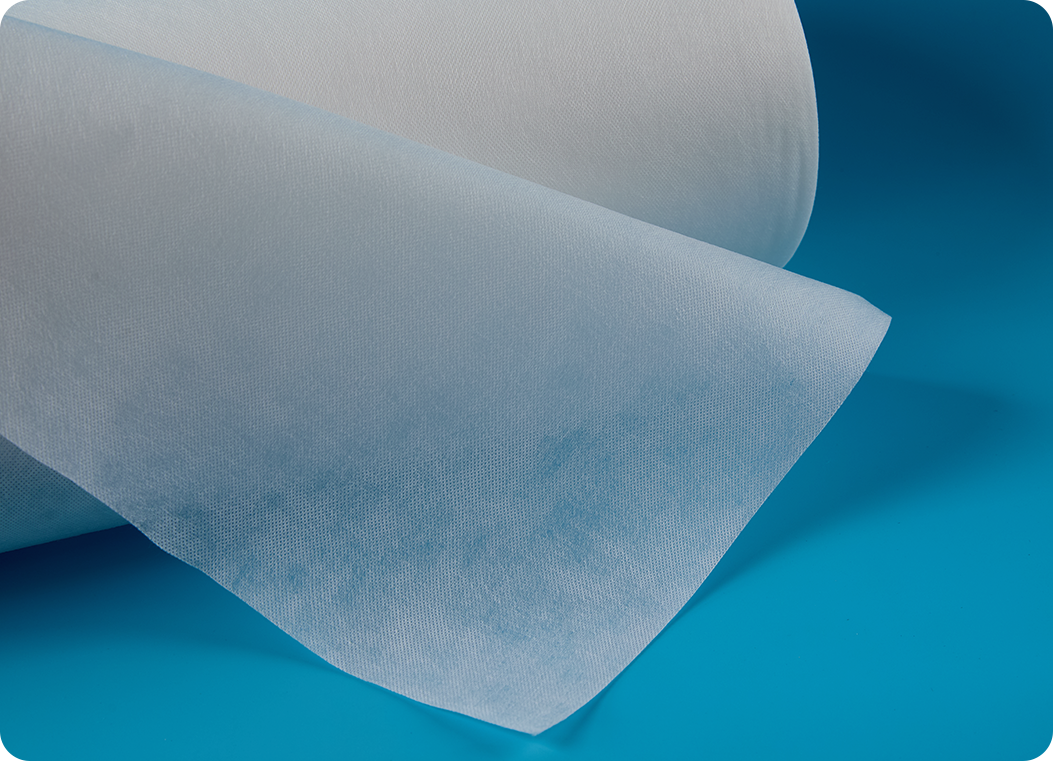
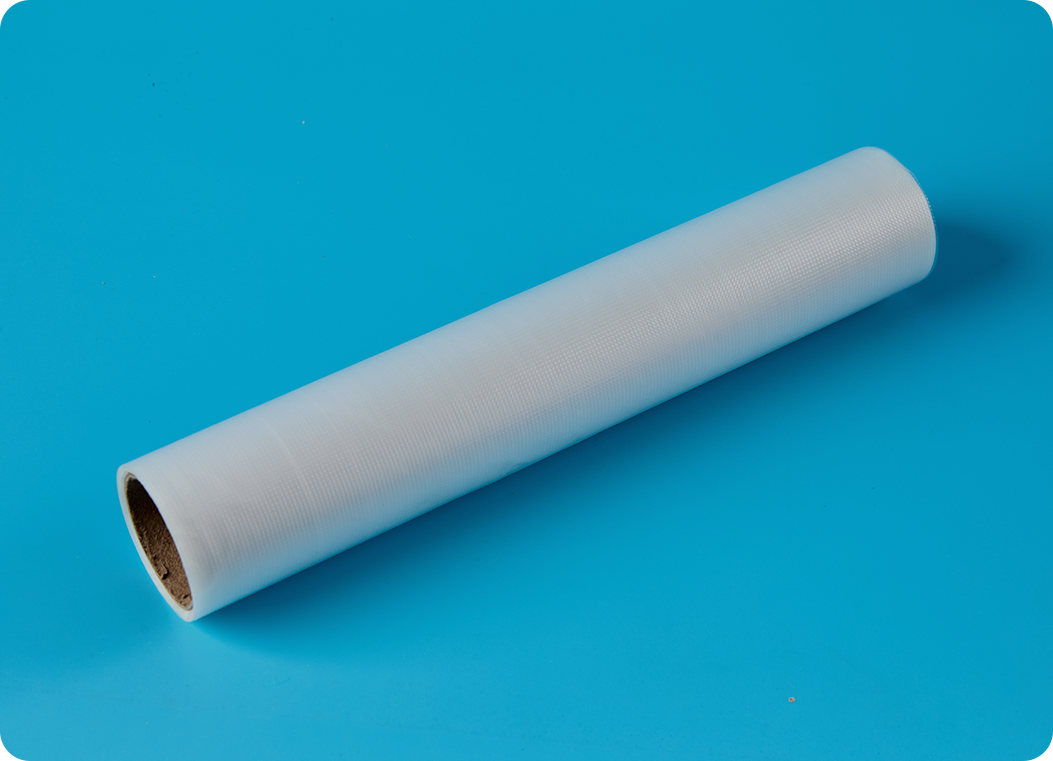
Garment hot-melt adhesive film is a solvent-free thermoplastic adhesive layer supplied in rolls, used to bond shell fabrics, linings, interlinings, and decorative motifs under heat and pressure. Anhui Haita New Material Technology Co., Ltd., a producer active since 2003, supplies PO and TPU film lines for apparel manufacturing. Because the material is invisible in the final seam, most defects appear only after wash testing, which is why selection criteria matter more than price.
Content
- 1 Why Garment Hot-Melt Adhesive Film Fails Before It Reaches the Needle
- 2 Material Families: PO, TPU, PA, and EVA for Garment Bonding
- 3 Three-Step Evaluation Process for Garment Hot-Melt Adhesive Film
- 4 Garment Hot-Melt Adhesive Film in Embroidery and Decorative Sealing
- 5 What a Garment Manufacturer Should Verify Before Purchase
- 6 Frequently Asked Questions about Garment Hot-Melt Adhesive Film
Why Garment Hot-Melt Adhesive Film Fails Before It Reaches the Needle
Most garment hot-melt adhesive film failures start with a specification mismatch: wrong activation temperature, excessive film shrinkage, or a surface-energy mismatch with the shell fabric. A film rated for 130 C will not wet out cotton that has absorbed moisture, creating a dry bond that splits during laundry. Film with high melt viscosity bridges the pores of breathable laminates, leaving a boardy hand and weak spot welds.
The four variables that cause the most defects are activation temperature, melt flow under pressure, shrinkage of the film carrier, and the moisture content of the fabric stack. In production, the first two are controlled by the press, the last two by the film roll and the conditioning room.
A common sourcing mistake is choosing a film based only on melting point. Actual bond strength depends on how quickly the polymer wets out on the yarn, which rises with pressure and dwell. A soft-hand film with a high melt index may strike through on fine silk, while a high-viscosity film will not anchor on open weaves.
Material Families: PO, TPU, PA, and EVA for Garment Bonding
Four polymer families dominate garment hot-melt adhesive film: PO, TPU, PA, and EVA, and each is selected by wash durability, elongation, and activation temperature. EVA films are cheap and low-melting but soften in warm washing. PA films create strong bonds on difficult textiles but need higher temperatures and carry a higher price. TPU films combine elasticity and wash resistance, making them the default for activewear and stretch fabrics. PO films are the workhorse for woven shirts and light dresses when the bond does not face repeated high heat.
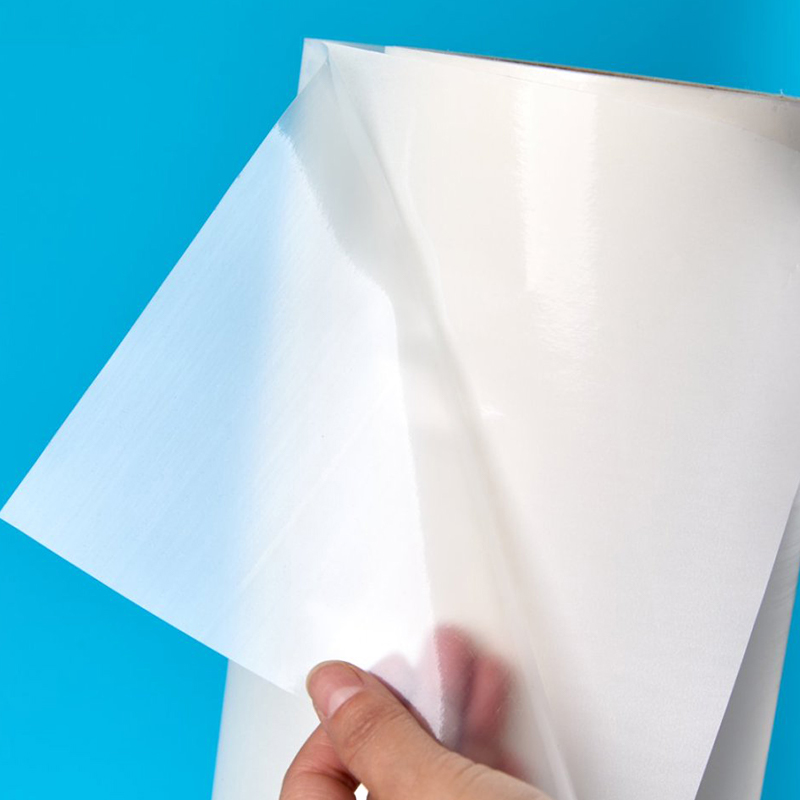
 PO Hot Melt Adhesive Film with Release Paper for Textile BondingThis polyolefin-based film stays non-tacky at room temperature and activates under heat, making it a practical choice for embroidery patches, woven labels, and light garments where moderate bonding strength is sufficient.View Product →
| Polymer | Activation range | Wash resistance | Best use in garments |
| EVA | 70-100 C | Low | Temporary quilting and low-heat decorative work |
| PO | 90-120 C | Medium | Woven shirts, linings, light dresses |
| TPU | 110-150 C | High | Activewear, stretch knits, seam sealing |
| PA | 120-160 C | High | Wool and structured garments needing sharp seams |
Coated film differs from unsupported film in handling and elongation. A coated garment hot-melt adhesive film is often easier to lay up on curved panels because the release liner carries the adhesive; an unsupported film stretches during feeding and can misalign. For high-speed belt laminating, unsupported film is usually slit with low-tension winding to prevent neck-in.
Three-Step Evaluation Process for Garment Hot-Melt Adhesive Film
A supplier evaluation of garment hot-melt adhesive film should run on your actual fabric stack under production dwell times, not on a generic swatch. The same film can produce a strong bond on a rose-print woven and a weak bond on a silicone-finished performance knit.
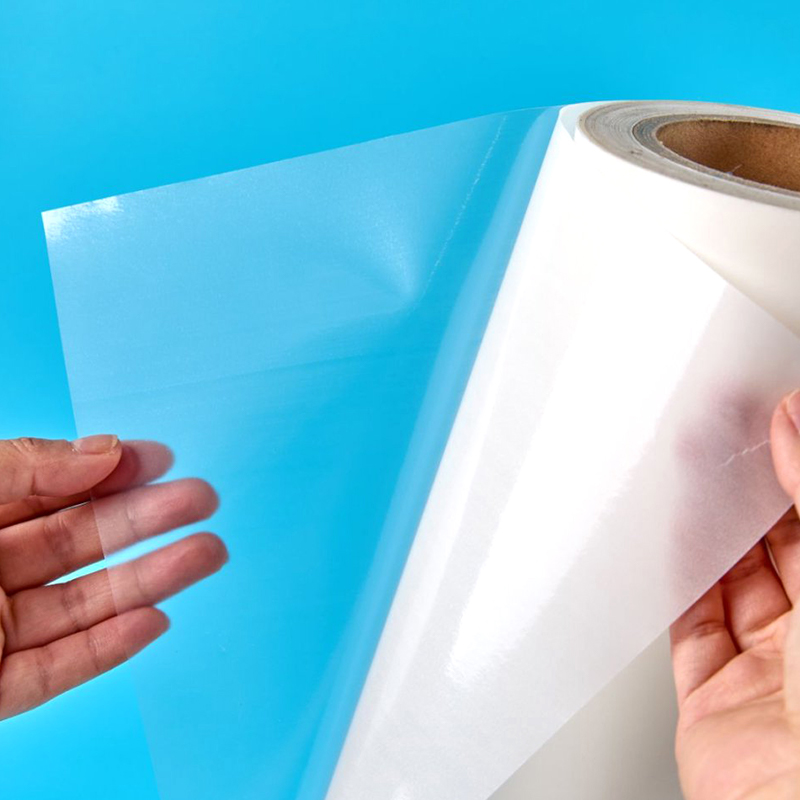
 TPU Hot Melt Adhesive Film for Stretch and Water-Resistant ApplicationsBacked by release paper and formulated with imported raw materials, this film provides elasticity and washing resistance, making it relevant for seamless underwear, shoe fitting, and reflective materials where flexible bonds are needed.View Product →
A practical evaluation also includes a light-box inspection after lamination. Transmit light through the bonded panel; a bright zone means the film did not flow, a dark zone means too much adhesive or strike-through. A uniform gray tone indicates the correct coat weight and activation.
- Confirm the activation window. Press at 10 C below, at, and 10 C above the rated temperature for the exact dwell time of your line. Measure bond width after a 90-degree peel.
- Run five wash cycles. Use the intended detergent and temperature. Crazing, wicking, or edge lift signals poor flow or excessive film shrinkage.
- Check film shrinkage and blocked storage. Unwind the roll after 24 hours and compare web width to the slitting spec. Rolls that block on the reel create crease bands.
Garment Hot-Melt Adhesive Film in Embroidery and Decorative Sealing
In embroidery, garment hot-melt adhesive film works as a heat-stable carrier that fixes backing films and topper layers during stitching, and its behavior after the process depends on whether the design needs a permanent seal or a removable carrier.
Embroidery hot melt adhesive films are formulated to resist needle heat and to keep web shape under hoop tension. A permanent film bonds patches and appliques to the shell; a temporary film is often paired with water-soluble backing on embroidered shirt fronts.
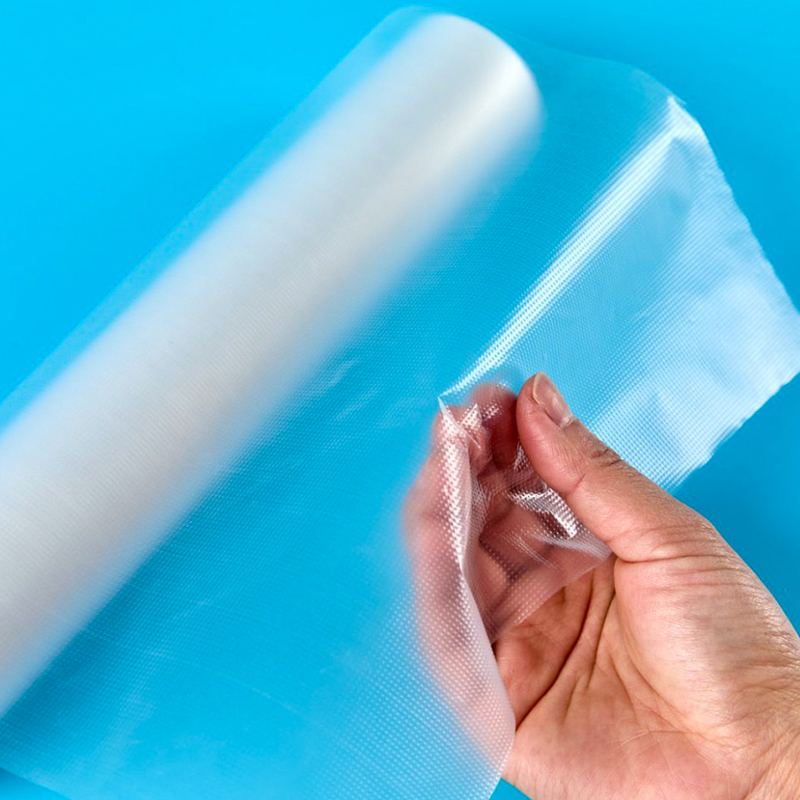
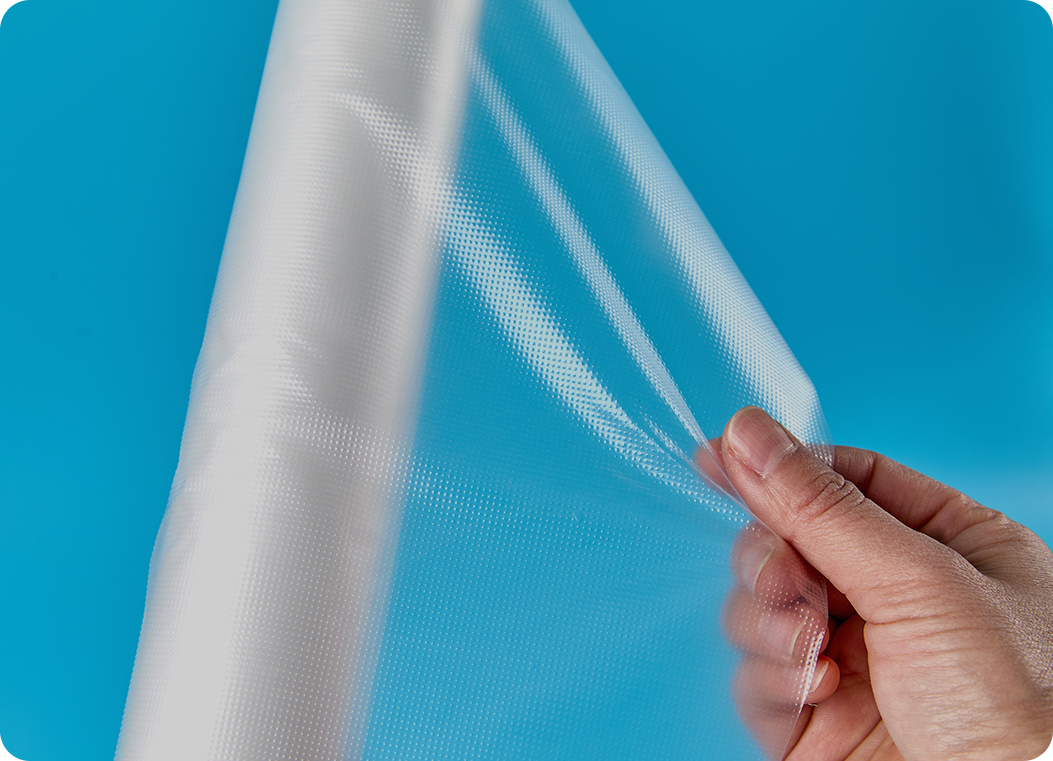
 Embroidery Hot Melt Adhesive Film with Low Activation TemperatureDesigned as a liner for embroidery, this PO-based film activates around 120–140°C, avoiding wrinkles and discoloration. Its embossed surface prevents fabric slippage, and it is formaldehyde-free, suitable for children's apparel and quality-sensitive embroidery.View Product →
For patch and embroidery sealing, the same film family can produce two different failure modes. Too little melt flow leaves a raised edge that catches the needle; too much flow bleeds through the face and appears as a glossy ring around the stitch. The right film bridges those limits by keeping a stable web during pressing.
Permanent decorative sealing
Uses TPU or PA film to bond applique edges, keep patch edges flat after washing, and prevent fray.
Temporary stitch support
Uses a lower-melt film on the back side of embroidery so that support materials can be removed without residue.
For a deeper view of carrier selection, review our guide to embroidery hot-melt adhesive film types and uses.
What a Garment Manufacturer Should Verify Before Purchase
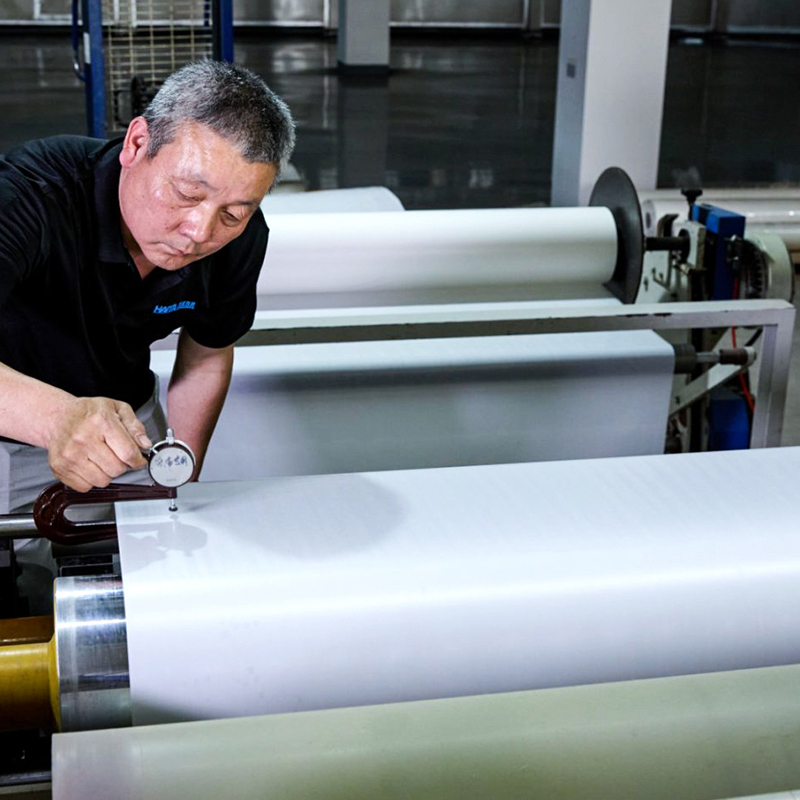
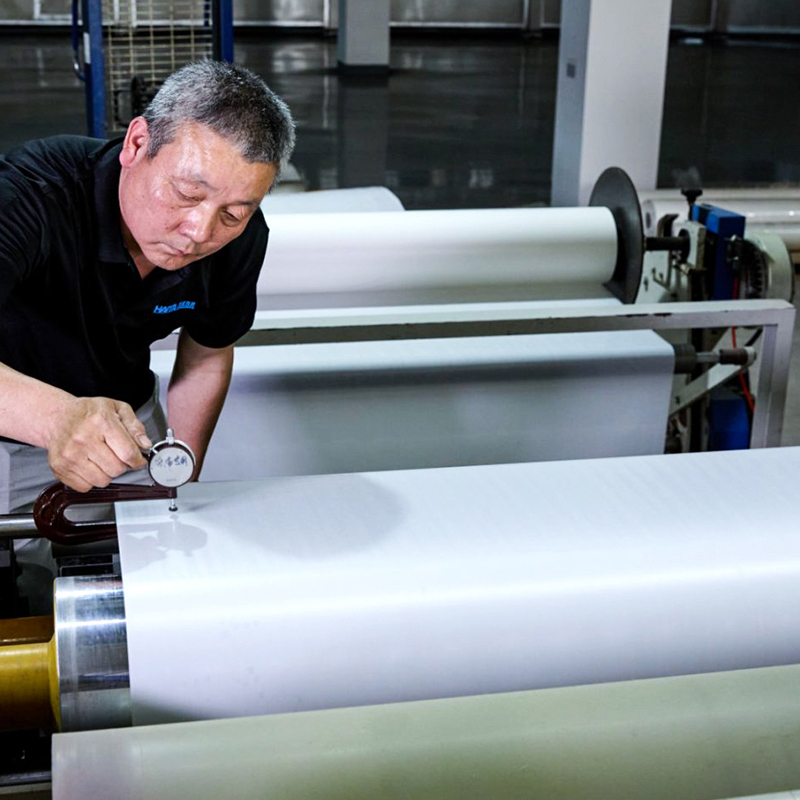
Before approving a garment hot-melt adhesive film, verify basis weight, thickness tolerance, activation temperature, and blocked-storage life on the supplied roll, not only on the technical data sheet.
A production-scale line can consume a full batch in a single day, so coating consistency across the roll matters more than the chemical name. Ask for the melt flow rate, the softening point measured by DSC, and the peel strength after a defined wash cycle. A thickness variation beyond plus/minus 5 percent creates bond-free patches on textured fabrics.
Ask the supplier for a blocked roll test: unwind a sample roll after 48 hours at 45 C and check for release-paper transfer. If the liner leaves dull marks, the film has a tackifier-rich surface and will jam the decoller on production days.
Frequently Asked Questions about Garment Hot-Melt Adhesive Film
The four questions below come up in almost every sourcing conversation for garment hot-melt adhesive film.
Can garment hot-melt adhesive film replace liquid adhesive in fusible interlining?
Yes, on automated lines. Film gives a controlled coat weight, no solvent emission, and a repeatable bond line width. Liquid adhesive remains useful for complex three-dimensional shapes where a continuous film cannot drape without wrinkling.
What temperature should I use for garment hot-melt adhesive film?
Start with the polymer family. EVA films press at 70-100 C, PO at 90-120 C, TPU at 110-150 C, and PA at 120-160 C. Always test at 10 C intervals around the rated value with the exact dwell time of your press.
How should garment hot-melt adhesive film be stored?
Store rolls vertically or on edge, away from heat sources, below 40 C, in low humidity. If the film is wound too tightly or exposed to pressure, blocking will cause release-paper transfer and bond-line defects.
Which garment hot-melt adhesive film type is best for stretch fabric?
TPU is usually best because it recovers with the fabric. Test elongation after lamination; a film that does not stretch with the knit will crack along the seam after repeated flexing.